
103kg to 71kg: The Weight I Carried — and How I Finally Put It Down
103kg to 71kg: the weight I carried — and how I finally put it down.
A seventeen-year story of gaining, losing, regaining, and finally understanding why the scale was never the real problem. Photos, mistakes, and the protocols that actually worked.
103kg to 71kg:
The Weight I Carried —
and How I Finally Put It Down
A 17-year story of gaining, losing, regaining, and finally understanding why the scale was never the real problem.
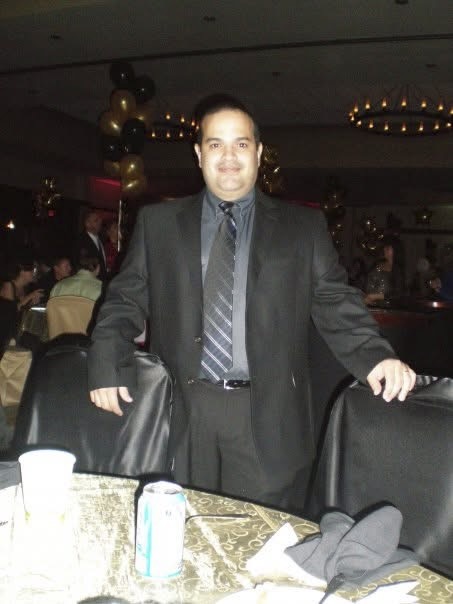
There’s a photo of me from around 2008 that I used to hide from. Not delete — I’m not the type to pretend the past didn’t happen — but I’d scroll past it quickly, the way you skip a scene in a movie that makes you uncomfortable. In that photo, I’m sitting at a restaurant in Texas, holding a napkin, looking down. I weighed 103 kilos. That’s 227 pounds on a 5’5″ frame. My BMI was somewhere north of 38. Clinically obese. I was 36 years old, and if you’d told me I was metabolically aging at twice my chronological rate, I would’ve shrugged and ordered another plate.
Today, in April 2026, I weigh 71 kilos — 154 pounds. I’m 53. I own two restaurants in Seattle. I have two grandchildren under four — Emma and Matthew. I walk 23,000 steps a day. My vascular age, measured by pulse wave velocity, is 50 — three years younger than my birthday says. And for the first time in my adult life, I don’t just look different. I understand why I was fat, what my body actually needs, and what’s trying to kill me at the molecular level.
This is not a weight loss success story. Not yet. It’s the story of a 32-kilogram journey that took 17 years, four states, four doctors across two countries, one genetic test, and finally an AI system to make sense of it all. And it’s the story of how a GLP-1 drug called tirzepatide was the catalyst — but not the cure.
The Man in the Photos
Let me show you who I was.
That’s me on the left around 2008 — at a New Year’s Eve event, in a suit that was working hard. And holding a giant bottle of Johnnie Walker at a party around the same time, because of course I was. I was living in a fog of carbs, alcohol, late-night meals, and the quiet denial that comes with being “big” in a culture where men don’t talk about their weight.
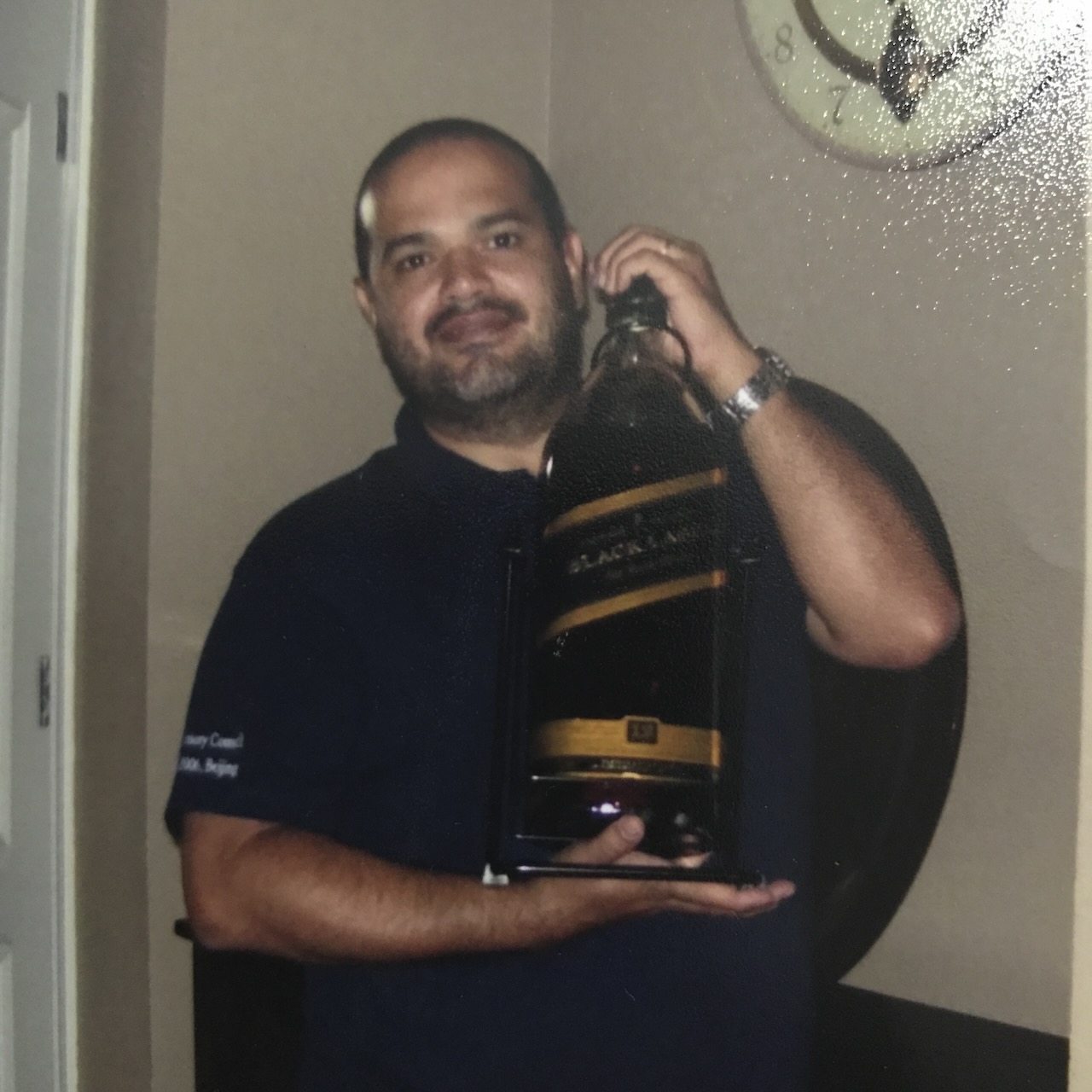
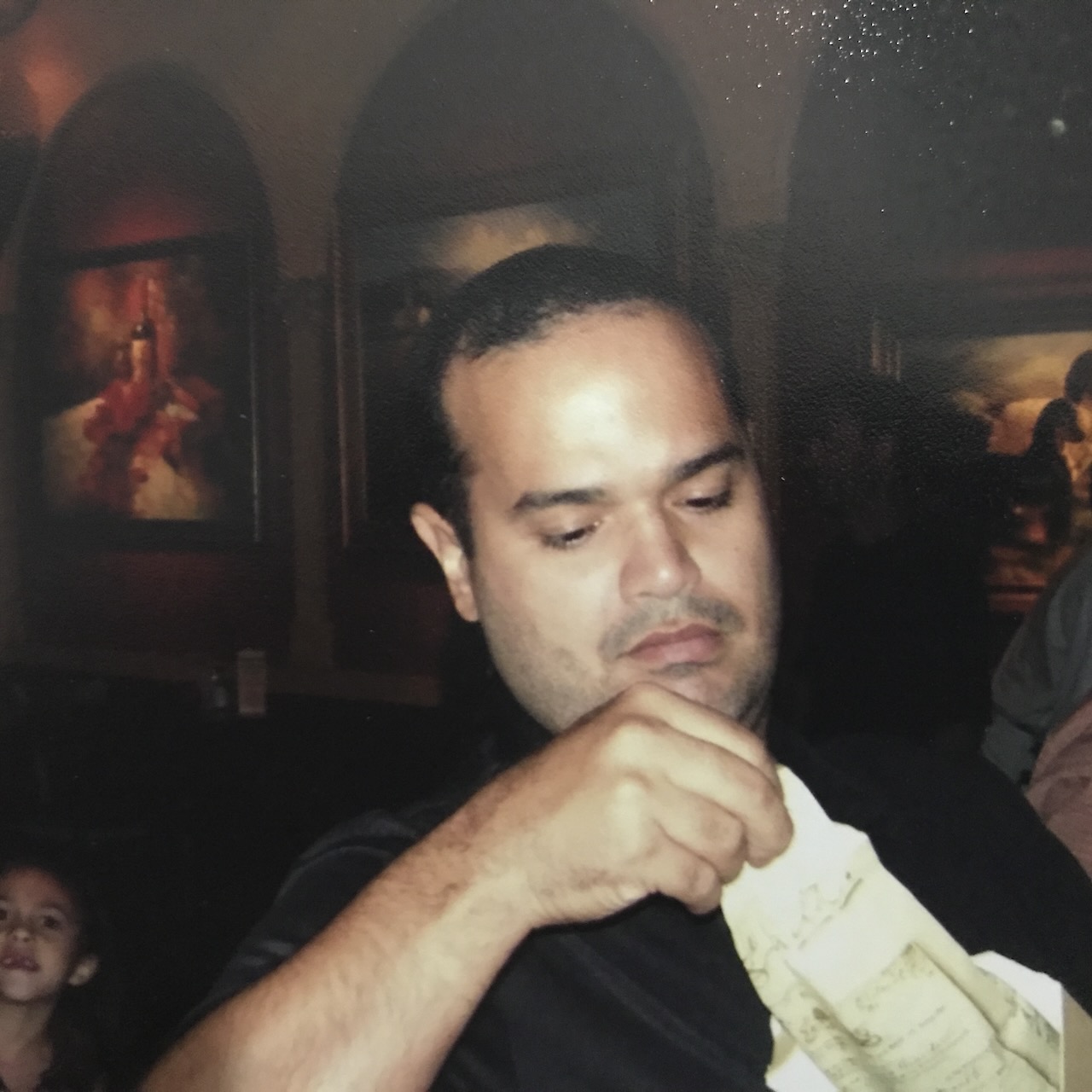
Left: The party years — that’s a full-size Johnnie Walker Black Label, for scale. Right: At a restaurant, naturally. Food was comfort, identity, and social currency all wrapped into one.

Another snapshot from the heaviest years. I didn’t own a scale. I didn’t want to know.
I wasn’t lazy. I was working brutal hours — building a career in cloud infrastructure across Staten Island, Austin, and Dallas. Supporting family in Brazil while raising two kids in the US. Navigating the identity split of being a Brazilian in corporate America, where lunch is a sandwich at your desk and dinner is whatever you can grab at 9 PM. The weight was just… there. Like a coat I forgot I was wearing. Every year it got heavier, but so gradually that I adjusted to it the way a frog adjusts to warming water.
“I didn’t gain 103 kilos overnight. I gained them one ‘just this once’ at a time, compounded over a decade of not paying attention.”
The Long, Messy Middle
Between 2008 and 2023, my weight went on a journey of its own. I’d lose 10 kilos, gain 15 back. Try keto for three months, fall off when life got stressful. Run for a while, hurt my knee, stop running, gain everything back plus interest. The classic yo-yo, except nobody calls it that when you’re a man. They just say you’ve “let yourself go” — or more often, they don’t say anything at all.
By September 2023, I was back up to 188 pounds (85.5 kg). Not my all-time worst, but close enough. I was 51. My daughter Nathalia had just made me a grandfather — my first granddaughter, Emma. The kind of life event that makes you recalculate everything. I remember holding her and thinking: I need to be here when she graduates college. That’s 2045. I’ll be 73. At this rate, I won’t make it.
What Changed in 2024
Two things happened in 2024 that broke the pattern. The first was pharmacological. The second was philosophical.
The drug was tirzepatide — a dual GLP-1/GIP receptor agonist that you might know by its brand name, Mounjaro (or Zepbound for weight management). My endocrinologist in Brazil, Dra. Penélope Tabatinga, prescribed it after reviewing my bloodwork and seeing the gap between my genetics and my reality: my DNA says I have a low genetic predisposition to insulin resistance (23% risk score), but my blood says my HOMA-IR is 3.50 — firmly in the pre-diabetic zone. My body was betraying what my genes promised, because 17 years of dietary abuse had overwhelmed whatever protection my genome offered.
Tirzepatide didn’t just suppress my appetite. It rewired my relationship with food. For the first time in my life, I could walk through my own restaurant — past the handmade pasta, the tiramisu, the fresh bread — and not feel pulled. The internal negotiation that had consumed mental energy every single day for two decades just… stopped. I could finally hear my body’s actual signals instead of the noise.
The second shift was philosophical. I stopped trying to “lose weight” and started trying to understand my biology. I got a full nutrigenetic panel done through Bioma Genetics in Brazil — a detailed map of the gene variants that affect how I metabolize food, store fat, process alcohol, and respond to medications. What I learned was revelatory.
My MC4R gene variant means I have a genetically efficient metabolism — my body extracts maximum energy from minimal food. Great for surviving a famine. Terrible for a man who owns an Italian restaurant. My GCKR variants (homozygous on both) give me a 43% risk score for fatty liver disease. My GLUT9 and RREB1 variants push my hyperuricemia risk to 56% — the highest of any domain tested. And my MTHFR heterozygous variant means I don’t convert folate properly, which matters for everything from homocysteine to liver protection.
For the first time, the weight wasn’t a moral failure. It was a systems problem — with identifiable inputs, measurable outputs, and actionable interventions. The engineer in me (former AWS and Azure Solutions Architect) finally had a framework that made sense.
“I spent 17 years treating obesity as a willpower problem. It took one genetic test to show me it was an engineering problem.”
What I Look Like Now
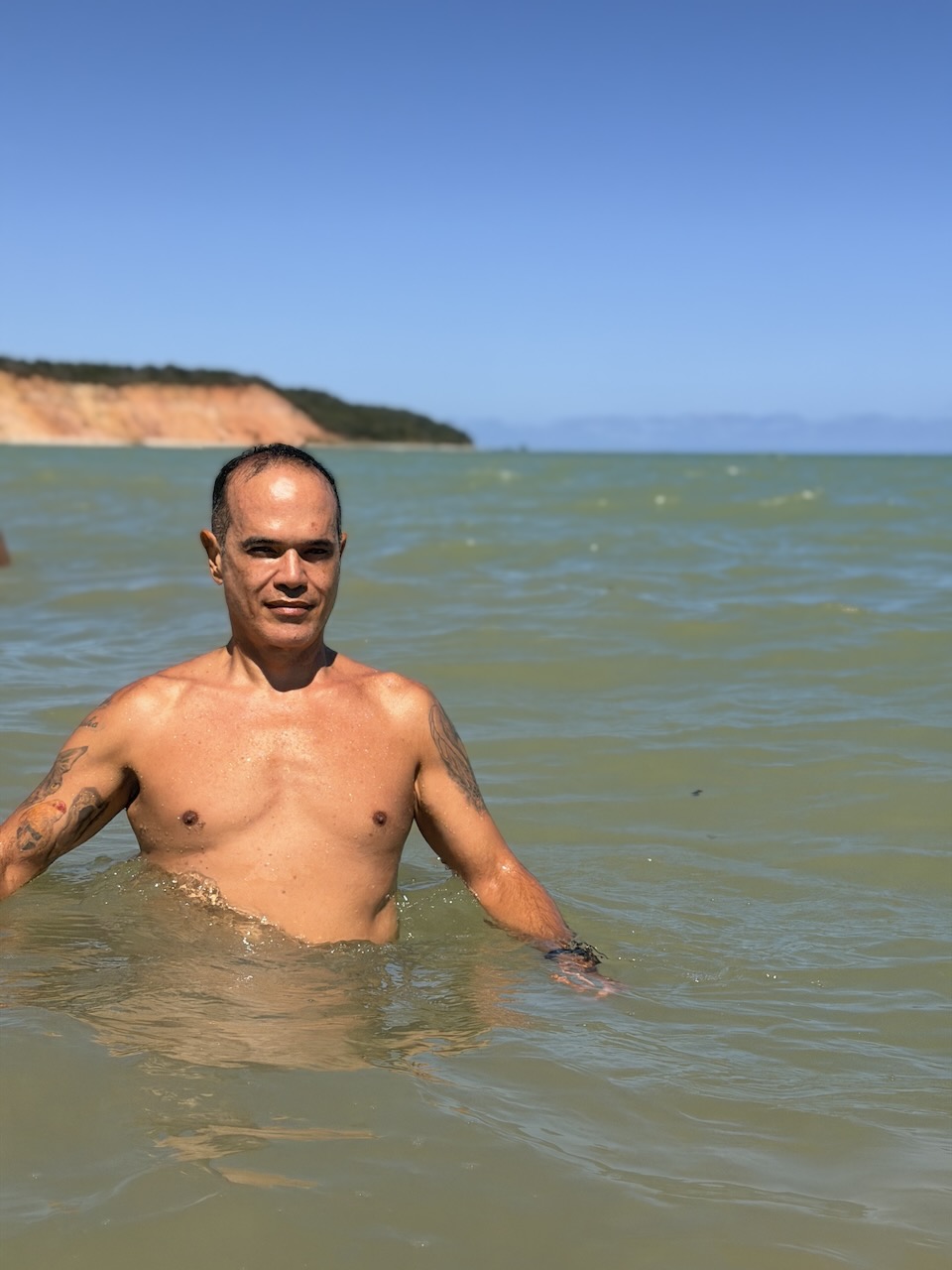
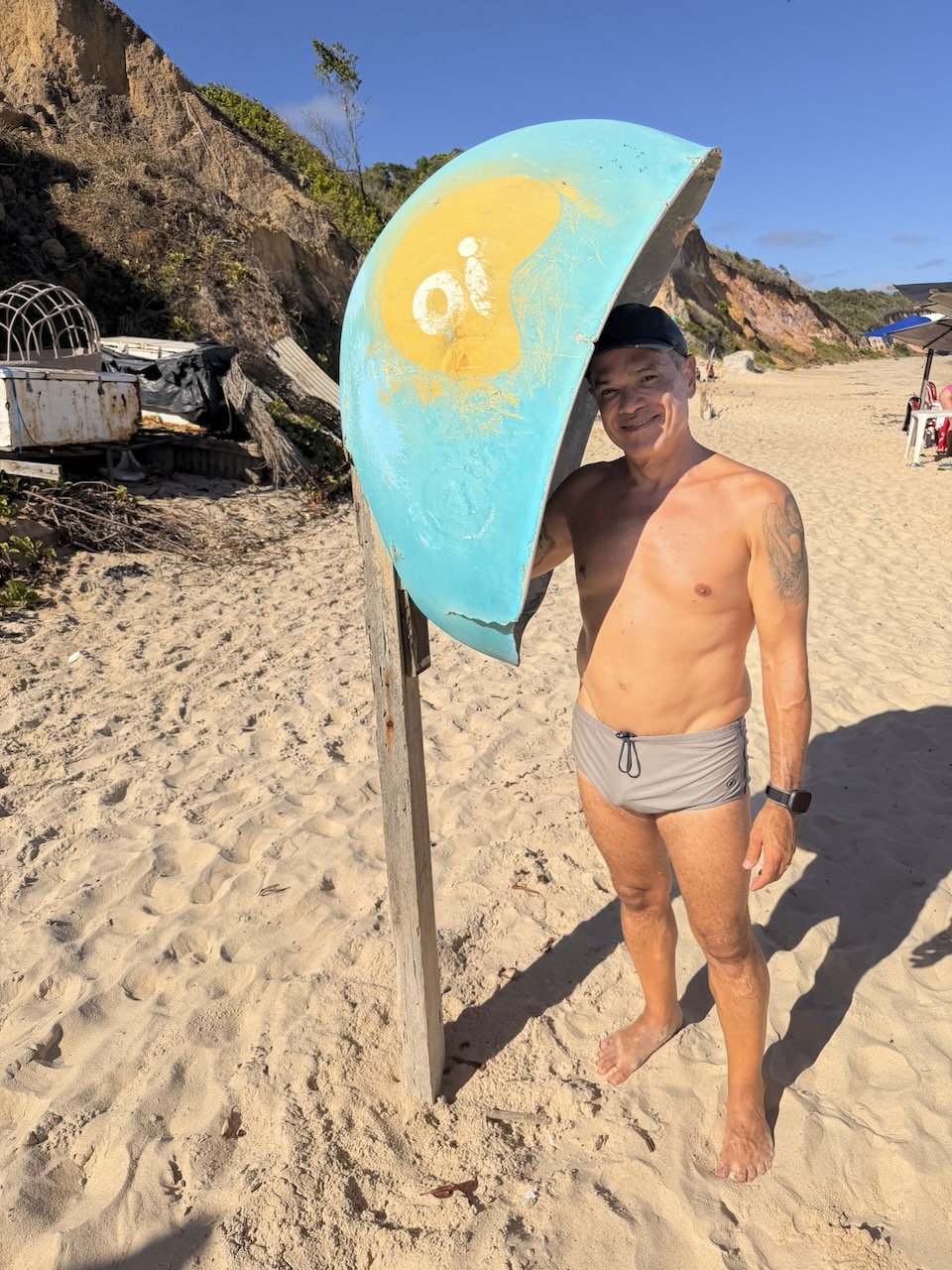
Here’s the part that still catches me off guard. I’ll see a photo of myself and do a double-take. Not because I’m vain — because I genuinely don’t recognize the guy sometimes. The man in these photos doesn’t match the image I carried in my head for nearly two decades.

Brazil, 2025. Same beaches I visited at 103 kg. Different body. Different bloodwork. Different relationship with the mirror. The tattoos stayed — they just have less canvas to cover now.


Left: Trying on a medium for the first time in 15 years. Right: Carrying my granddaughter Emma at a family celebration — in a suit that fits, not one that’s working overtime.
The Real Motivation
I could tell you I did this for longevity metrics. And that’s partly true — my HOMA-IR of 3.50 terrifies me, my hs-CRP of 1.5 mg/L needs to come down, and my Free T4 dropping to 0.70 ng/dL keeps me up at night (which, ironically, makes my sleep worse, which makes my insulin resistance worse — biology loves a vicious cycle).
But the honest answer is simpler than that.

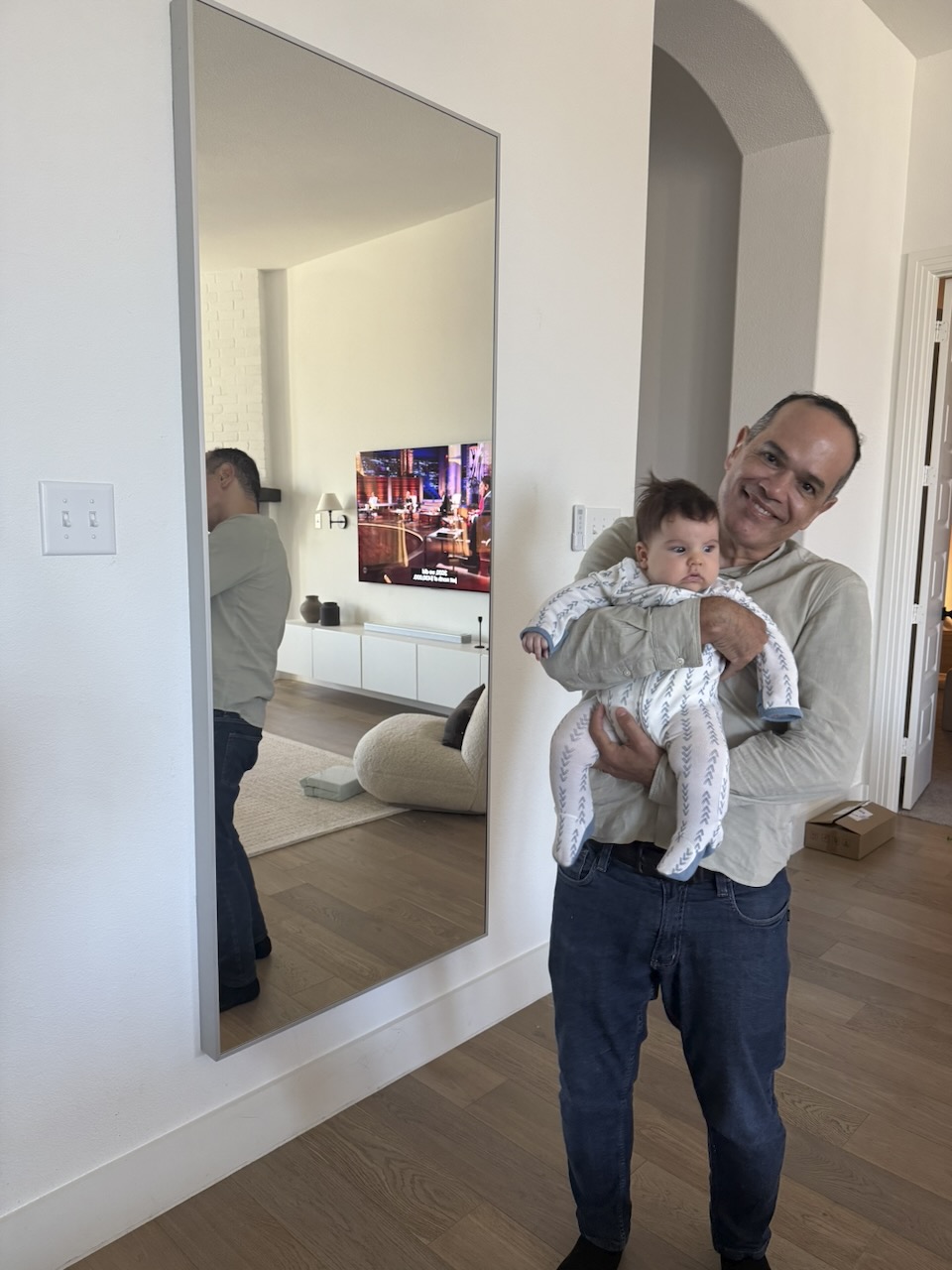
Emma and Matthew. That’s it. That’s the entire protocol rationale.
Emma will be 25 in 2048. I’ll be 76. Matthew will be 23 in 2048. I want to be at both of their weddings. I want to walk without a cane, dance without getting winded, and remember every second of it without cognitive fog. That’s not vanity — that’s the minimum viable outcome for a grandfather who refuses to be a spectator.
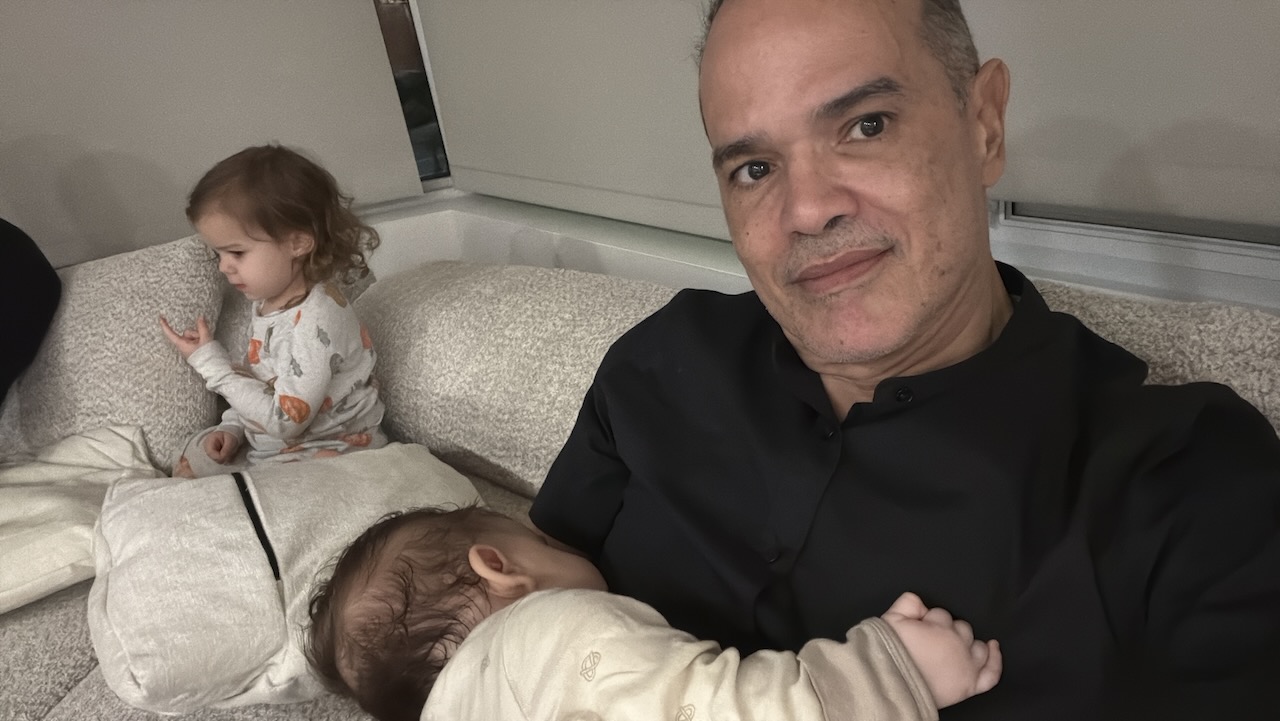
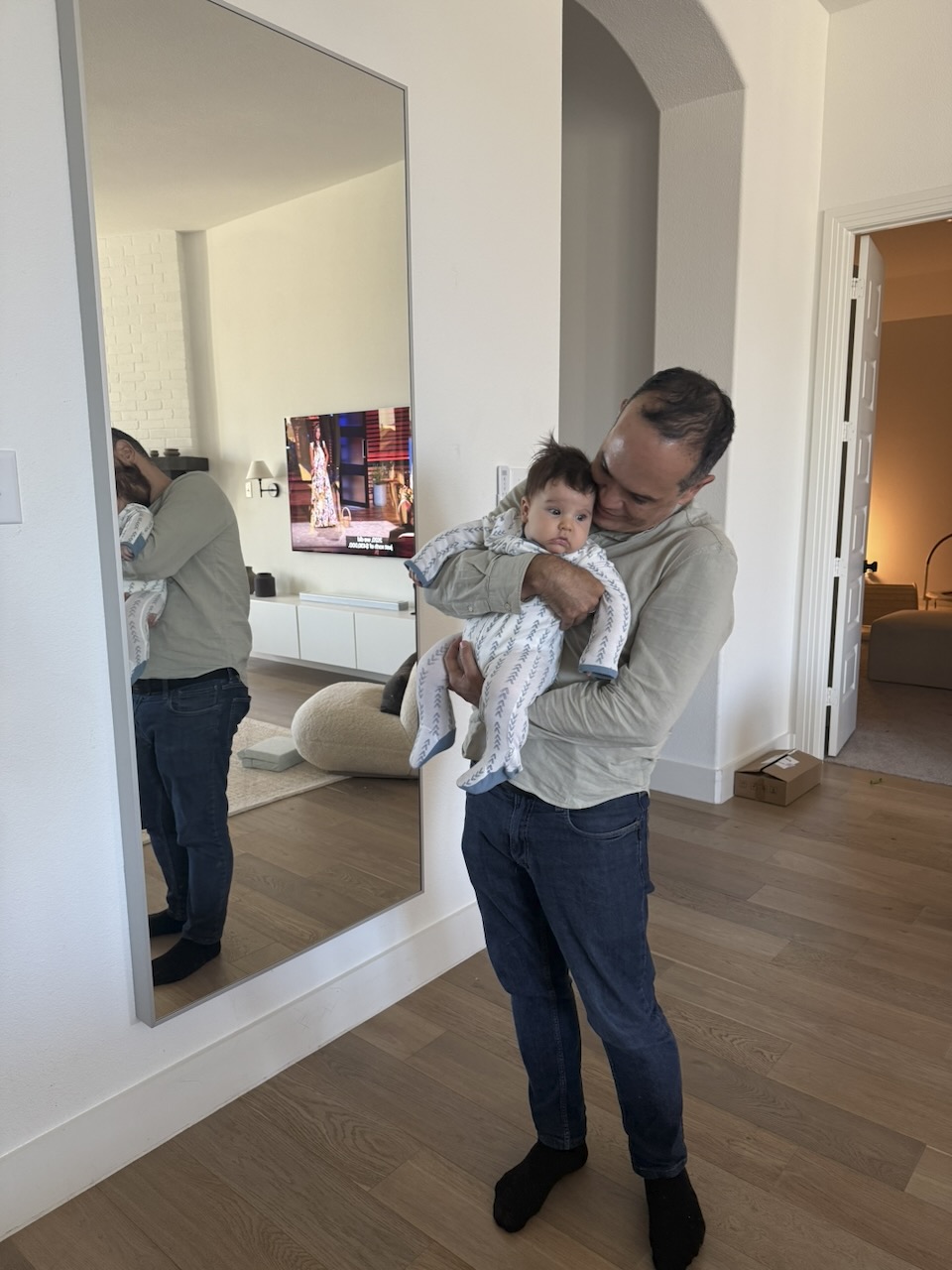
The late nights with the grandkids that make the early mornings of walking 23,000 steps worth it.
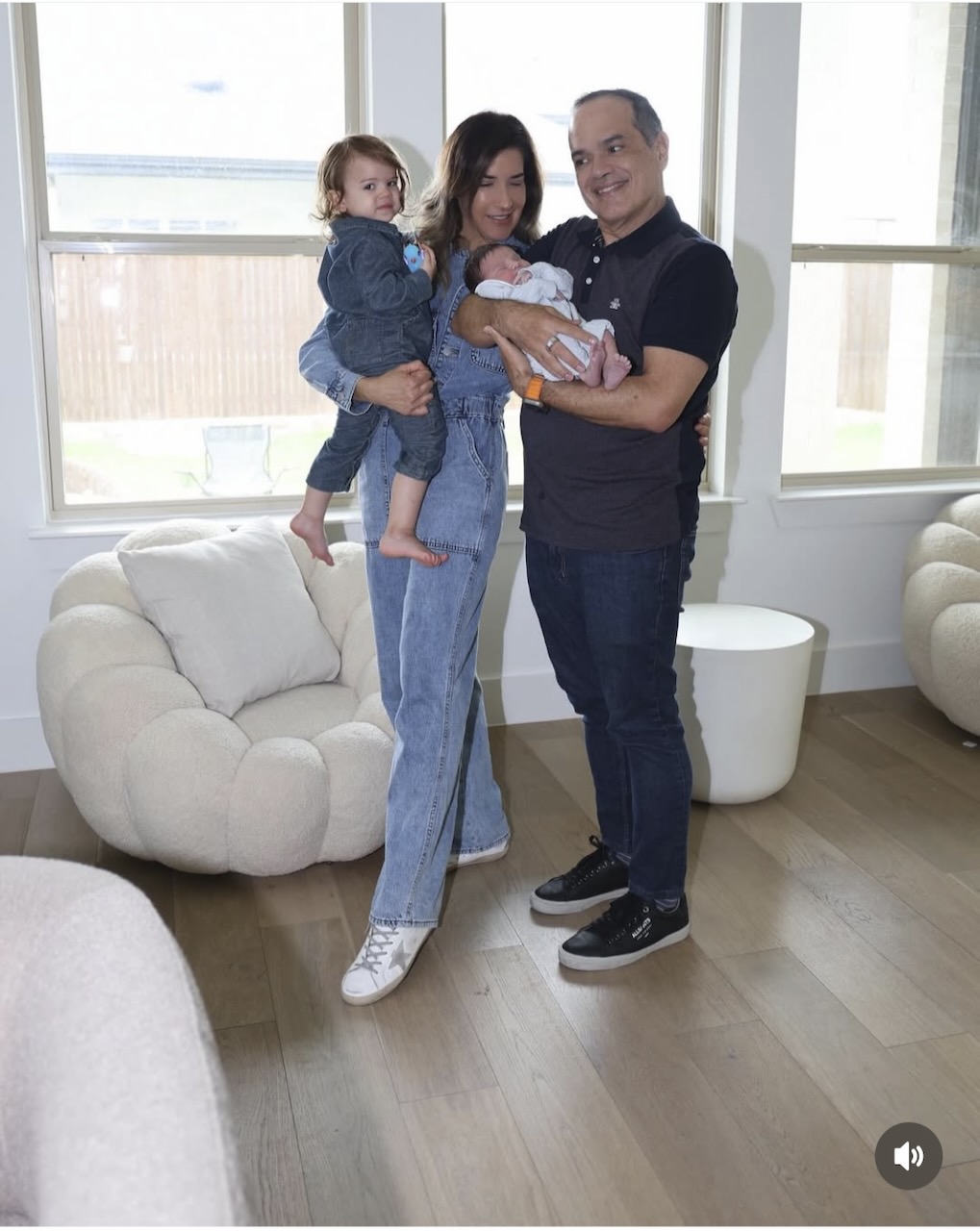
With Nathalia, Emma, and Matthew. The whole reason.
My son Felipe is 30. My daughter Nathalia is 28 — and the mother of these two beautiful humans. They grew up watching me yo-yo through every diet that existed. They saw the heaviest version of me and loved me anyway. But now they’re watching something different: a father who finally stopped guessing and started measuring. A father who can explain why he takes each pill in his stack. A father who shows up leaner, sharper, and more present every time they see him — and who has the bloodwork to prove it isn’t an accident.

The full Cruz crew at a family celebration. Three generations. This is who I’m optimizing for.
What I Know Now That I Didn’t Know at 103 kg
If I could send a message back to the man eating his feelings in that restaurant in Texas in 2008, here’s what I’d say:
Your weight isn’t the problem — it’s a symptom. The real enemy is insulin resistance, and it’s already building inside you. Your fasting glucose looks “normal” because your pancreas is screaming to compensate. By the time glucose goes up, you’re already deep in trouble. Ask your doctor to test fasting insulin and calculate your HOMA-IR. They probably won’t — you’ll have to insist.
Your genes aren’t your destiny, but they’re your terrain. You have variants that make you metabolically efficient, prone to fatty liver, and vulnerable to high uric acid. You can’t change the variants, but you can change the environment they operate in. Low carb isn’t a fad for you — it’s a genomic prescription.
Walking is the most underrated intervention in medicine. You don’t need a gym membership or a CrossFit addiction. You need 20,000 steps a day. That alone — combined with carb restriction and adequate sleep — will do more for your insulin sensitivity than any single supplement in your cabinet.
The restaurant is both your greatest risk and your greatest test. You chose to build a life around food and drink. That’s beautiful and dangerous. The protocol has to coexist with the profession, or it will fail. There’s no version of this where you stop being a restaurateur. There’s only the version where you learn to thrive inside the tension.
What’s Next
I’m 4.3 pounds from a BMI of 25. My body fat is 19.3% and I need it under 15%. My HOMA-IR is 3.50 and needs to be below 2.0. I still have 2.68 pounds of visceral fat that needs to disappear. My hs-CRP is at 1.5 when it should be below 0.5. My Free T4 is declining and nobody’s figured out why yet.
I’m not done. I’m not even close.
But I’m no longer the guy who doesn’t own a scale. I’m the guy who owns a DEXA scanner appointment, a genomic profile, four doctors across two countries, a 15-supplement stack customized to my DNA, and a project called Vitae that’s tracking every single data point — publicly, transparently, in real time.
Because I believe the path I’m walking — literally, at 23,000 steps a day — isn’t just for me. There are millions of men in their 40s and 50s who feel “fine” but whose blood tells a different story. Men who’ve never heard of HOMA-IR. Men who think a DEXA scan is something for athletes. Men whose doctors test their cholesterol but never their insulin.
I’m doing this loud so they don’t have to figure it out alone.
“53 → 60, looking 50. No billions required.”
— Project Vitae taglineGet the next Field Note in your inbox.
One man, real data, sent only when something moves. No noise, no supplements to sell, no daily check-ins. Just field notes from the experiment.
You’re in. Check your inbox to confirm — the first Field Note is right behind it.
Something went sideways. Try again, or email saulo@vitaexperiment.com.